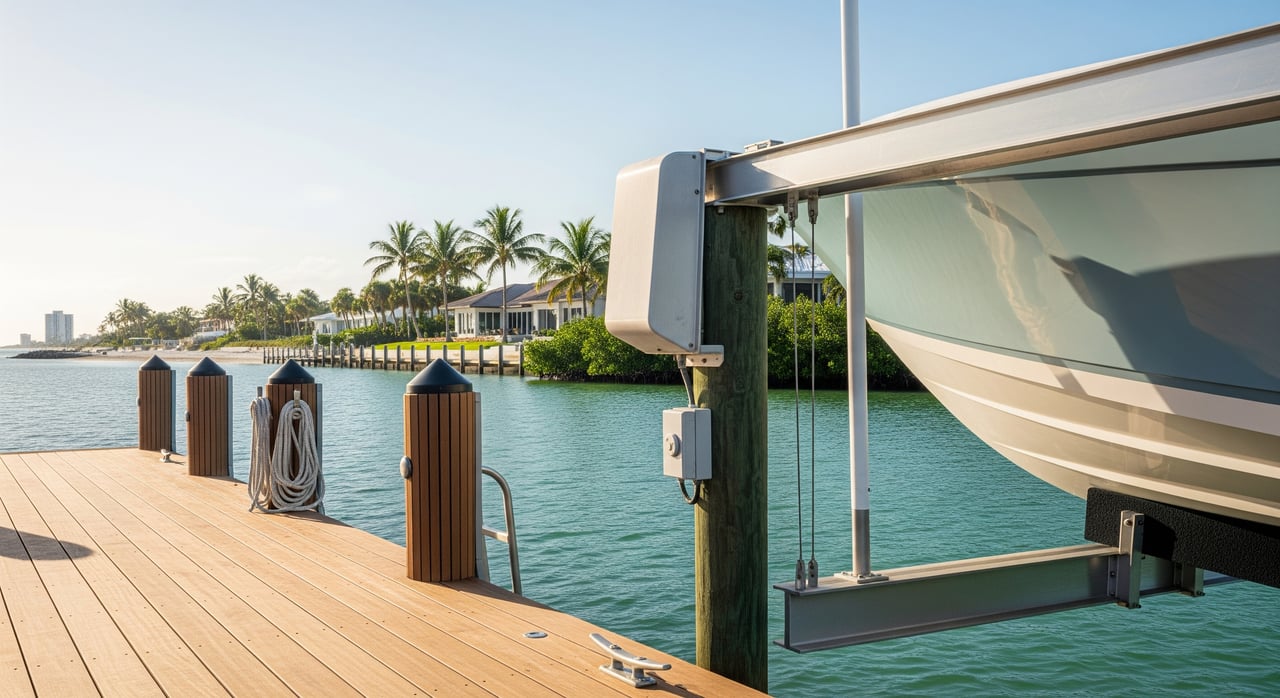
Siesta Key Boat Lift Basics and Smart Dockage Tips
December 4, 2025
December 4, 2025
Picture this: you wake up on Siesta Key, the water is calm, and your boat sits ready for a quick run to Sarasota Bay. If direct boating access is part of your home search, getting dockage and boat lifts right is essential. The details matter here, from tidal swings and canal depths to HOA rules and permits. In this guide, you’ll learn the basics of local water conditions, the main dock and lift options, how permitting works, and practical planning steps to avoid surprises. Let’s dive in.
Siesta Key sits in a microtidal region. Daily tidal ranges are typically about 1 to 2 feet in the Sarasota area. This small swing still affects how high your lift must raise, how your dock sits, and how much clearance you need. When you size a lift or plan a deck height, work from Mean Low Water and Mean High Water values and check predicted extremes with local tide information.
Canal depth varies by location and recent maintenance. Many interior residential canals can be only a few feet deep at low tide, while dredged channels and access cuts are often deeper. Do not rely on neighborhood stories. Require a current sounding survey at low tide to confirm depth and draft compatibility before you assume your boat will fit.
Sedimentation is a real factor. Sand and silt can accumulate over time, especially after storm events. Some areas need periodic dredging to keep channels navigable. Ask for records of past dredging and whether the HOA or COA funds and manages channel maintenance or issues assessments.
Storms and surge influence design decisions. Siesta Key is exposed to tropical systems. Docks and lifts should be engineered for surge, wind, and wave loading. Sea-level rise is also a long-term planning factor that can affect fixed dock elevations and approaches. Seek designs that balance current use with future conditions.
Access to open water impacts your boating lifestyle. Some properties offer quick access to Sarasota Bay or the Gulf, while others sit on dead-end canals. Shallow cuts, narrow turns, and fixed bridge clearances can limit boat size and height. Confirm travel routes, bridge heights, and realistic transit times for your preferred vessel.
Choosing the right setup starts with your boat’s length, beam, and draft, then layers in canal depth, wave exposure, and association rules.
A floating dock rides on buoyant modules and moves with the water level. These can suit shallow canals with modest wave action and smaller vessels. They are generally simpler and more cost-effective to install. The tradeoff is more movement in waves and potentially lower durability in exposed conditions. Some HOAs may restrict them.
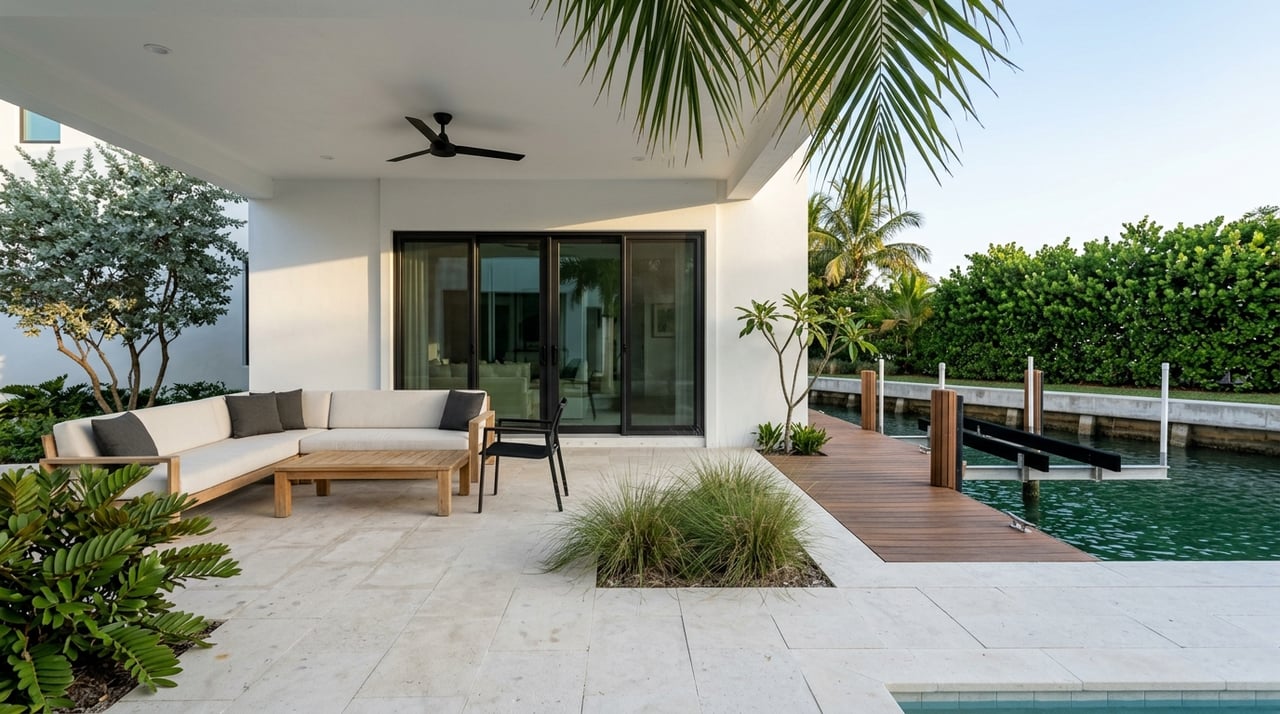
A fixed dock uses pilings driven into the seabed and holds a set elevation. You gain stability, load capacity, and comfortable access for frequent use. The tradeoffs are higher cost and less tolerance for sea-level change. In areas with small daily tide swings, fixed docks can work very well.
Multiple agencies may be involved. Sarasota County manages local building permits and coastal construction oversight and maintains records of past shoreline projects. The Florida Department of Environmental Protection authorizes work in sovereignty submerged lands and handles environmental approvals for docks, lifts, seawalls, and dredging. The U.S. Army Corps of Engineers may require federal authorization if work affects navigable waters or special aquatic resources. Some small projects qualify for general permits, but others need an individual review.
Expect constraints aimed at protecting the environment. You may face limits on dock size, placement, materials, and lighting to reduce impacts on seagrass, mangroves, and water flow. Dredging can be restricted in shallow or protected areas. Covered structures are often limited. Plan on supplying a site plan, certified surveys, and structural details with your applications.
HOA and COA rules can be just as decisive. Associations often define allowed dock types, maximum lengths and widths, position relative to lot lines, vessel size limits, and standards for materials and appearance. Ask about maintenance responsibilities, approval processes, required contractor qualifications, and any history of dredging or seawall assessments.
Insurance deserves early attention. Your homeowner’s or marine policy may need endorsements for docks and lifts. Associations sometimes require proof of liability coverage for dock and lift owners. Flood insurance follows standard rules for upland structures, while docks may be treated differently. Confirm coverage details with your carrier.
A clear sequence saves time and budget.
Simple projects, like a small floating dock with a basic lift, can move from planning to permits in several weeks to a few months, with construction measured in days to a few weeks. Complex projects that include dredging, large pilings, or stacker lifts can require multi-agency reviews that take several months. Build in contingency time for weather and coordination.
Costs vary widely by boat size, dock type, materials, piling depth and diameter, barge access, and permit or dredging needs. A small floating dock with a basic lift sits at the lower end. A fixed dock with a vertical hydraulic lift lands in the middle for a medium boat. Heavy-duty fixed docks with large hydraulic or stacker lifts, electrical upgrades, and any dredging are on the high end. Request multiple itemized quotes that separate permits, materials, piling, lift equipment, electrical, and mobilization.
Plan on annual inspections of pilings, connections, wiring, and lift components. Lubricate moving parts and maintain batteries or hydraulic systems. Before tropical weather, secure or raise lifts, tie down or remove loose items, and follow storm procedures. With routine care, piles and hardware can last decades, while mechanical systems may need component replacements over 10 to 20 years, depending on use and environment.
You deserve both lifestyle clarity and financial confidence. With deep barrier-island expertise and a CPA background, Cindy helps you match your boating needs to the right property, review HOA covenants and prior permits, coordinate depth and elevation surveys during due diligence, and connect with reputable marine contractors for practical design and cost opinions. You get a disciplined, boutique experience with attention to the details that protect long-term value.
Ready to find a Siesta Key home that fits your boating life? Reach out to Cindy Fischer to start a focused, data-informed search.
Stay up to date on the latest real estate trends.
Whether buying or selling, Cindy's attention to detail and extensive knowledge of Longboat Key makes her the perfect choice to fulfill your real estate needs.