What Changed in Longboat Key's Turtle Nesting Season 2026
August 27, 2026
August 27, 2026
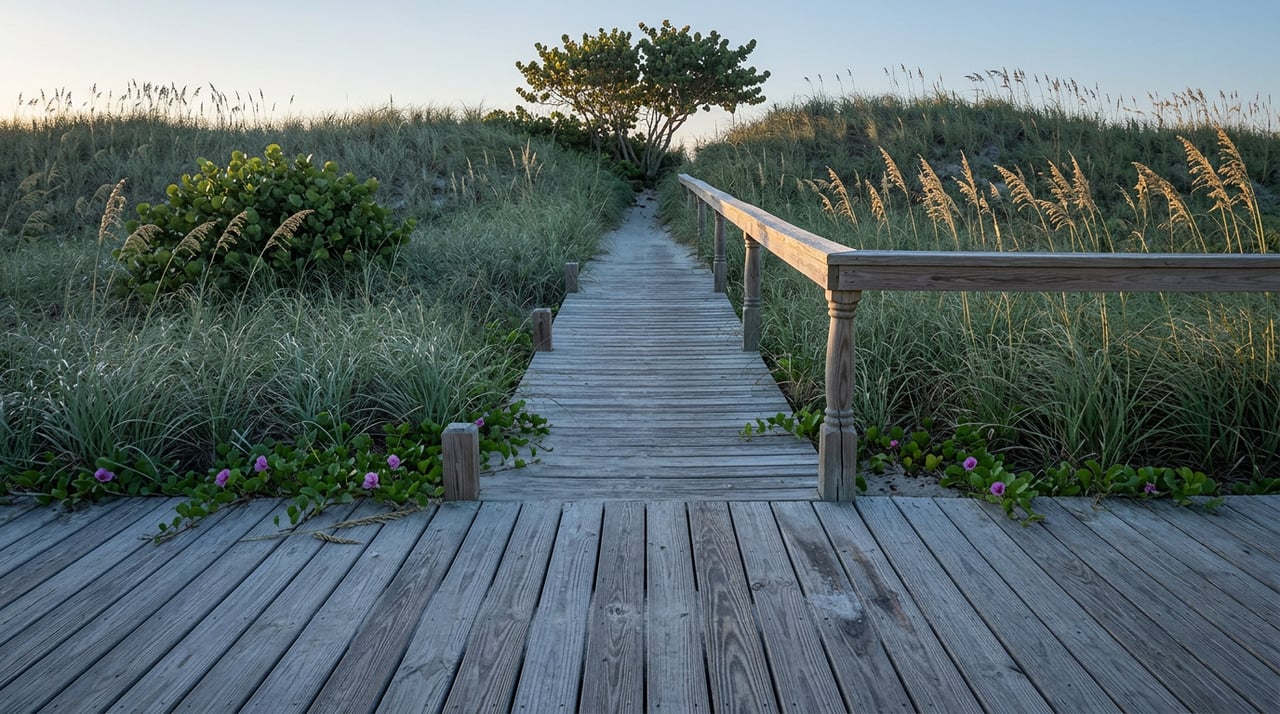
Walk Gulfside before seven most mornings this month and you will pass more staked-off patches of sand than you remember from July. Some have four wooden posts and bright tape marking a rectangle. Others have just one stake standing alone, no tape, no boundary. If you assumed the single-stake nests were an afterthought, or a sign that Longboat Key Turtle Watch has less time on its hands than it used to, the truth runs the other direction. There are simply too many nests to give every one the full survey.
That density is the good news. The bad news arrived on August 12, when volunteers found a dozen dead sea turtle hatchlings near Gulf of Mexico Drive on Longboat Key, the same morning 55 dead hatchlings turned up on Anna Maria Island. Nine days later, the count of distressed and disoriented hatchlings on the island was still climbing. For anyone who has lived here through a normal nesting season, the pairing feels backward. More nests should mean more successful hatches, not more mornings like this one.
As of August 18, Longboat Key had logged 1,297 nests for the 2026 season. That is behind the pace of 2025, which closed as a record year with 1,473 nests on the key and 5,736 across the 35 miles of beach Mote Marine monitors from Longboat Key through Venice. It is also ahead of 2024. Two islands over, Casey Key remains the busiest stretch on Mote's entire survey area, with 2,240 nests recorded this year.
Here is where the comparison gets misleading if you stop at the raw counts. Melissa Macksey, Mote's data manager for the Sea Turtle Research and Conservation Program, has said directly that measuring 2026 against 2025 does not tell you much, because 2025 was not a normal baseline. It was an outlier season, and the reason it was an outlier is the part worth understanding if you own property here.
| 2025 season (final) | 2026 season (through Aug. 18) | |
|---|---|---|
| Nests on Longboat Key | 1,473 (record) | 1,297 |
| Nests across Mote's 35-mile survey area | 5,736 | still being tallied |
| Sea turtle disorientations regionwide | 717 (also a record) | a dozen dead hatchlings near Gulf of Mexico Drive and 55 on Anna Maria Island reported Aug. 12 |
The 2024 hurricane season hit this coast twice, with Helene and Milton both making landfall within weeks of each other. The debris field they left behind on local beaches, driftwood, downed vegetation, displaced sand berms, stuck around into the following spring. Nobody planted it there to help turtles. But it did, by accident, block a meaningful amount of the artificial light spilling from houses and condos onto the sand. Hatchlings navigate by finding the brightest, lowest part of the horizon, which on a natural beach is moonlight over open water. Inland light competes with that signal and pulls them the wrong way. With debris standing between the sand and the streetlights and porch fixtures behind it, 2025's hatchlings had an unintentional shield that 2024's did not.
That shield is part of why 2025 broke records on both ends of the ledger. More nests survived to hatch, and more of those hatchlings had a clearer shot at the water. It also helps explain why 717 disorientations, itself a record, coexisted with a record hatch. The debris was buying time and blocking sightlines even as the volume of nests strained everyone's capacity to monitor them.
Two years on, most of that debris is long gone, and much of the storm-damaged construction behind it has been rebuilt or is underway. The light it used to block is back on for long stretches of beach. Jeff Driver, president of Longboat Key Turtle Watch, has been fielding the tide and weather side of this season's problems, including nest markers knocked loose by the precursor to Tropical Storm Bertha in July. On overwashed nests, he is careful to note the eggs are usually still viable even when the stake is gone.
"It's not unusual for nests that are closer to the water to have a probability of being overwashed."
That is a normal, weather-driven problem Turtle Watch has managed for years. The lighting problem behind this month's dead hatchlings is a different one, and it is the one residents actually have some control over.
The density of this season created a second, less visible shift. Driver has explained that Turtle Watch now fully monitors roughly every fourth nest, the ones that get the traditional four corner stakes with biangulation measurements recorded against the shoreline and vegetation line. The rest still get marked, but with a single stake and no measurements. Volunteers call this stake non-monitored. It is not neglect. It is triage, and it is a direct consequence of a nesting population large enough that documenting every single nest to research standard is no longer physically possible with the current volunteer patrol.
If you see a lone stake on your stretch of beach this week, that nest was laid, confirmed, and marked. It just was not selected for the full data set Mote uses to track incubation outcomes down to the egg. Both kinds of stakes carry the same instruction for anyone walking past: leave it alone, and if it goes missing after a storm or a high tide, call it in rather than replanting it yourself, since a stake set back in the wrong spot can mislead the next patrol.
Longboat Key's marine turtle protection code, updated in 2022, requires lights visible from the beach to be turned off or shielded from sundown to sunup, with the Town specifically flagging the 11 p.m. to 5 a.m. window as the period Turtle Watch patrols most closely for stray light. Turtle-friendly bulbs, amber-toned and shielded, are the fix the code points toward for fixtures that cannot simply be switched off. Beachfront owners who want to keep chairs, kayaks, or paddleboards on the sand overnight rather than clearing them daily as the code otherwise requires can apply for a Recreational Use Agreement through the Town's code enforcement office.
None of that is new this year. What changed is the backdrop it operates against. With the storm debris gone, a porch light left on past 11 or a beach chair left out overnight carries more weight for a nest's odds than it did in 2025, when the wreckage down the beach was doing some of that blocking on its own. Mote's team has also pointed to the recent stretch of new moon nights, when almost no moonlight reflects off the water, as another factor stacking against hatchlings trying to find the brightest horizon. A dim natural sky combined with a bright artificial one is close to the worst combination for a hatchling crawling for the first time.
Nesting and hatching both continue through October 31, which means the next ten weeks will keep testing whether this year settles closer to 2024's numbers or climbs back toward 2025's. Longboat Key Turtle Watch's volunteers, the same ones logging four-stake and single-stake nests before sunrise, also spent part of July celebrating something smaller but telling: the reinstallation of their Adopt A Shore sign at the Gulfside beach access, knocked down by Helene and Milton back in 2024 and only now back in place. It is a minor thing next to a dead hatchling count, but it marks the same recovery arc the whole island has been on since those storms, one piece of infrastructure and one habit at a time.
If you are watching the stakes on your own stretch of beach this season and want to understand how this year's numbers compare to what came before it, or how a nesting season like this one tends to shape the rhythm of life on the key more broadly, Cindy Fischer has spent more than two decades paying attention to the details that make Longboat Key what it is. Let's Connect.
Stay up to date on the latest real estate trends.
Whether buying or selling, Cindy's attention to detail and extensive knowledge of Longboat Key makes her the perfect choice to fulfill your real estate needs.